Category: Music
KA Hartmann Symphony No.7-8
Symphonies No.7 & 8 Bamberger Symphoniker and Ingo Metzmacher
Karl Amadeus Hartmann Symphonies No. 1-6
Listening to:
- Symphony No. 1, Versuch eines Requiem for alto and orchestra (1950) – revised version of Symphonisches Fragment (on texts by Walt Whitman)
- Symphony No.2 (1946) – revised version of Adagio
- Symphony No.3 (1948-9) – adapted from portions of Symphony Klagegesang and Sinfonia Tragica
- Symphony No.4 for string orchestra (1947-8) – adapted from Symphonic Concerto for strings
- Symphony No.5, Symphonie concertante (1950) – adapted from Concerto for wind and double basses
- Symphony No.6 (1951-3) – adapted from Symphony L’Oeuvre
Played by Bamberger Symphoniker conducted by Ingo Metzmacher
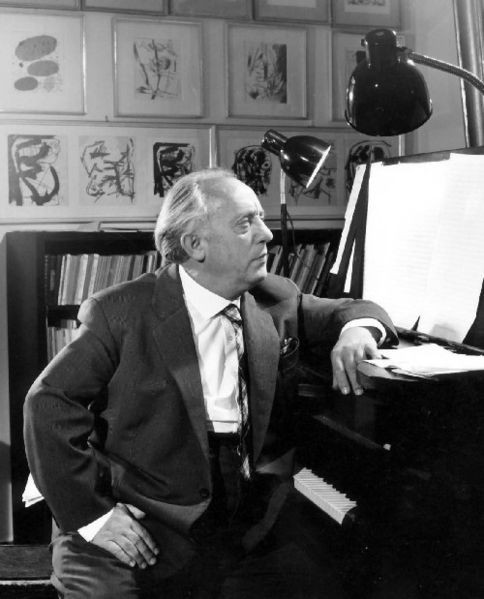
Why don’t some composers get recognition? Wagging the long coda
I am not a musical academic and at best I might describe my my forays into music as being driven just by the pure pleasure of it all rather than that of an amateur music lover with an interest of the theory. This year I’ve been focusing on orchestral music and particular that of the 20th century. As I explore the various sources that I search for music it amazes me how much original ‘classical’ music is being composed and also how many composers that I’ve never heard of who have substantive bodies of work. Even more fascinating is that this music is approachable and accessible even to those that don’t like the more extreme and avant-garde musical movements of the last 120 years.
Today I’ve been listening to the symphonies of Karl Amadeus Hartmann. KA Hartman is one of a bunch of German composers of whom I’ve only recently become aware. As the Wikipedia entry says – he might be the greatest but also least known German symphonist of the twentieth century. Hartman’s music is excellent and well worth purchasing. It has always been a question why contemporary and past composers don’t get recognition – why some are in fashion and others out. Who knows, for example, whether Nico Muhly will be well known only decades after his death?
These are some of my thoughts on the matter.
Almost all of the major composers of the 20th century that might be considered household names (in classically oriented households) were also the leaders of their own musical movements and in some, but not all cases, wrote in a style that was instantly recognisable. For example in Minimalism everybody knows Glass and Reich. The knowledgable might also know Riley and Adams…but then it runs dry even though there are other exponents.
Following on from this I’d say that neoclassicism is frowned upon. On one hand the audiences want palatable music and it simply can’t be the case that all of the good tunes are taken already. On the other hand the critical audience also wants novelty and invention. The music must have an idea – musical pleasure and satisfaction is not enough.
Language and Nationalism also play a role. Except for the megastars of the compositional world commissions and premiere performances focus on the local.This likely favours the American and European composer in their own regions. Getting onto foreign programs requires conductors to champion the cause and audience engagement.
The new or under recognised composer’s compositions are often relegated to be the warm-up act in orchestral programming – they get the first half of the program while the major names get the second half.
There isn’t enough promotion of composers composing music that you can just sit and listen to – whether in live performance or on recordings. Many composers write for the cinema and people leave their films saying ‘what a great soundtrack’ yet few people seek out the composers ‘serious’ work.
Finally, I think the search engines in online stores are very deficient. Occasionally I will make finds using the iTunes Genius function but it surprises me how infrequently Genius makes the matches that I make by broader reading. And more often than not I have to try multiple search terms to locate the piece of music I am looking for. There needs to be an archetype for the metadata associated with this music to better enable finding interesting music in the long tail…or should I say coda.
Listening from earlier this week: Henri Dutilleux
Le Loup Fragments Symphoniques : Georges Pretre
Toute un Monde Lointain – Concerto for Cello and Orchestra : Serge Baudo, Orchestra de Paris and Mstislav Rostropovich
L’arbe Des Songes – Concerto for Violin and Orchestra: Renaud Capucon, Orchestre Symphonique de Radio France and Myung-Whun Chung
Some Danish Symphonies
Carl Nielsen Symphony No 1 in G minor FS.17, op.7 and Symphony No.2 ‘The Four Temperaments’ FS.29, Op.16.
Herbert Blomstedt and the Danish Radio Symphony Orchestra
Some more Penderecki
Tonight there is some more Penderecki to be listened to:
Capriccio for Violin and Orchestra
Canticum Canticorum Salimonis
De Nature Sonoris No.2
The Dream of Jacob
Emanations for Two String Orchestras
Partita for Harpsichord and Chamber Orchestra
Cello Concerto No.1
Some Aaron Copland
Aaron Copland (1900-1990) – some pieces played by The Saint Paul Chamber Orchestra conducted by Hugh Wolff:
Music for the Theatre
Three Latin American Sketches
Quiet City
Appalachian Spring
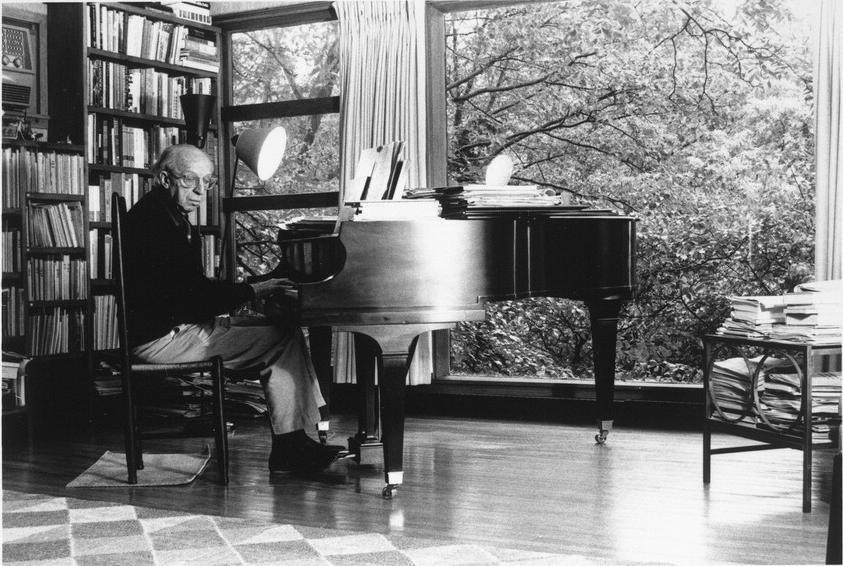
Some Penderecki tonight
Listening to music by Krzysztof Penderecki
Anaklasis for Strings and Percussion with the London Symphony Orchestra
Threnody to the Victims of Hiroshima with the Polish Radio National Symphony Orchestra
Fonogrammi with the Polish Radio National Symphony Orchestra
De Natura Sonoris No.1 with the Polish Radio National Symphony Orchestra
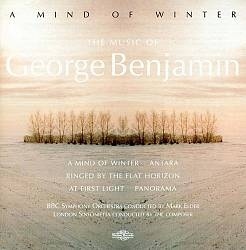
Listening to the music of George Benjamin CBE
Listening to orchestral pieces by George Benjamin
BBC Symphony Orchestra conducted by Mark Elder
London Sinfonietta conducted by the composer
Ringed by the Flat Horizon for Orchestra
A Mind of Winter for soprano and chamber orchestra
At First Light for Orchestra
Panorama
Antara for Orchestra
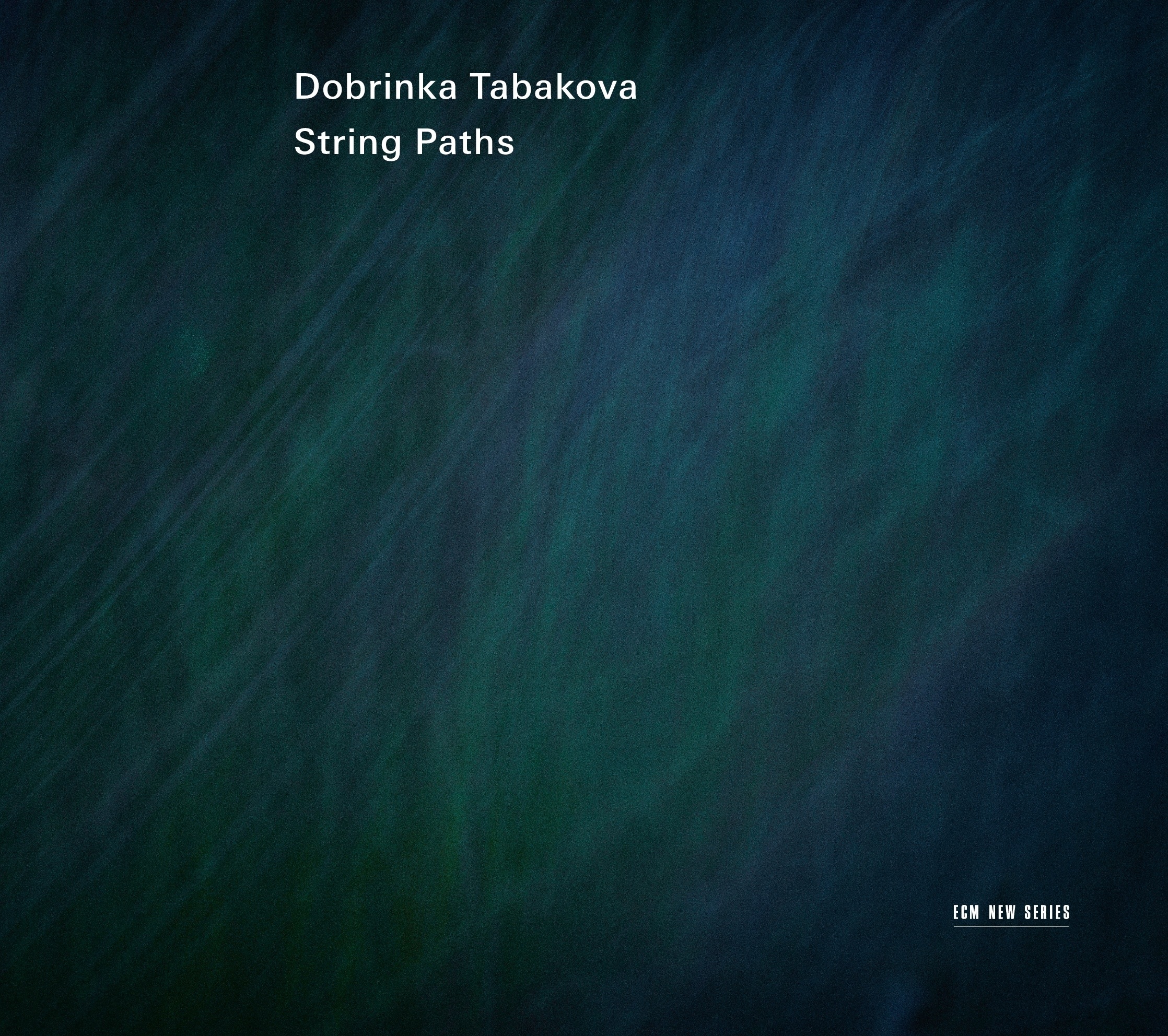
If you are a fan of Gorecki Symphony of Sorrowful Songs you might like Tabakova
If you love Symphony of Sorrowful Songs by Henryk Gorecki then you might like the album of string music from Dobrinka Tabakova
 winstonliauw