Visitors by Philip Glass
Visitors by Philip Glass played by Bruckner Orchester Linz under the direction of Dennis Russell Davies
Visitors by Philip Glass played by Bruckner Orchester Linz under the direction of Dennis Russell Davies
So a local facility, Medica Hurstville is in administration.
How can this be so?
It was advertised as a state of the art facility with all of the mod cons, the latest technology and the smartest specialists. In reality it was a facade for an investment program, for a super-fund or some similar activity: the primary purpose was to raise money for investors, the aim was not to provide quality care for patients.
The facility actually wasn’t world’s best because it wasn’t designed by people who knew health. It advertised how wonderful it was before it actually had any doctors and as a consequence it got very few patients.
I think there is a take home message – the builders didn’t understand healthcare and even worse they didn’t understand that people in healthcare can get rich not by providing spin but by providing good quality healthcare. Profit should be incidental and not the primary motive when it comes to health.
Disclaimer: the ability to make profit shouldn’t be eliminated otherwise things might go backwards, it’s just the motives that need to be addressed
Angelina Jolie, every adolescent man’s (read every male given brain development) video game fantasy woman declared earlier this year that she had undergone a double mastectomy and breast reconstruction as genetic testing had determined that she had a very high risk of developing breast cancer. Her own personal story includes a mother who died from her own hereditary risk of cancer which she unknowingly passed to her daughter.
Angelina essentially cited the evidence (let’s call this science), common sense and a strong desire to protect the future of her children. In the latter case it was the ability to raise them to adulthood and seeing their own destinies unfold.
Let’s compare and superimpose these arguments on the debate around climate change.
The science says the planet is warming and it is our fault. If the planet keeps warming then there will be increasing numbers of climate related disasters, sustained food and water insecurity and economic failure i.e. planetary cancer.
Common sense says that even if these predictions aren’t 100% accurate (Angelina’s chances of cancer are not 100%) then at least it takes reasonable steps to mitigate them. In the case of climate change the common sense argument is even stronger: we can see with our own eyes the current effects of man on the environment and we can take active steps to reduce our so called carbon-footprint.
Finally, Angelina acted to on behalf of her children. In the case of climate change let’s consider our children and future generations. I saw a great mock advertisement today of an ever thinner iPad being handed to an ever thinner African child. Perhaps, if we don’t act on climate change then this will be our legacy. Angelina acted, maybe society should too?
Seven Pastorales by Lou Harrison. Dennis Russell Davies conducting the Brooklyn Philharmonic.
Etruscan Concerto by Peggy Glanville Hicks – Brooklyn Philharmonic Orchestra
Alan Hovaness Symphony No.22 “City of Light” Seattle Symphony under direction of Dennis Russell Davies and cello by Janos Starker
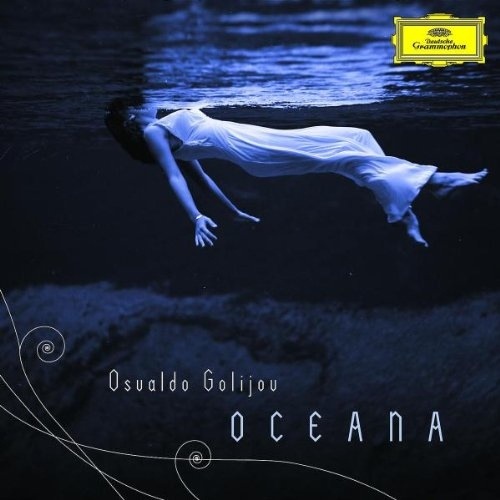
Kronos Quartet playing Tenebrae (2002) by Osvaldo Golijov
It was nice to read the article Michael Mosley’s Five Biggest Health Myths this weekend. On the same weekend I was in a store and overheard a conversation between customers about managing their common colds – they related their remedies of high doses of vitamin C and echinacea and were disappointed that it was still too cool to indulge in salt water. The first two methods are unproven in randomised trials and well, the latter, who knows.
Although I didn’t agree with all of Mosley’s advice (and he admitted some of it was based on early data) his underlying point is correct. We use our health knowledge (or health literacy) to inform our health choices.
Unfortunately many people really have poor health literacy – a lady I’ve treated for ovarian cancer for 18 months recently asked me where her pelvis is. The problem is aggravated by a proliferation of health myths. A lot of common information about diet and exercise is basically wrong or was ill-formed and made part of wide-spread public health initiatives.
One of the things we need to do to promote preventive medicine is actually provide accurate health information about diet and exercise rather than old-fashioned myths.
After that we need to know how to nudge people to follow the advice but that will be part of another blog post.
 winstonliauw