Category: Uncategorized
“Hello, I’m your conductor for the next 5 years” – David Robertson
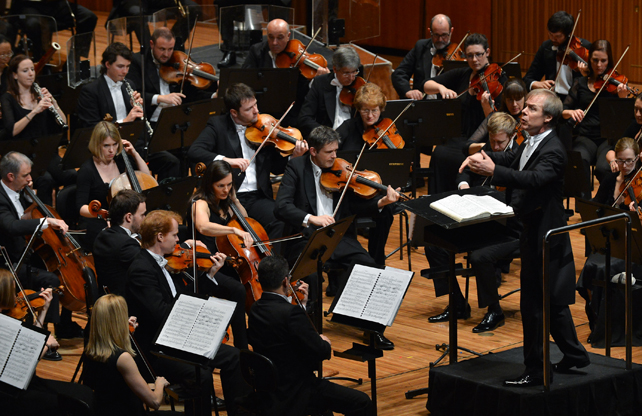
So began the pre-concert talk by Maestro David Robertson, the new Chief Conductor and Artistic Director of the Sydney Symphony Orchestra.
Thus began 5 years of applause.
A fantastic concert was performed by a top of form SSO along with the Australian String Quartet.
The program consisted of:
Igor Stavinsky – Symphony in Three Movements
John Adams – Absolute Jest for string quartet and orchestra
and Ludwig van Beethoven – Symphony No.7 in A, op.92
The music drew from modernism, classicism, neo-classicism and minimalism with the binding themes being rhythm and Beethoven. The Adams in particular combined the the challenging idea of a concerto for string quartet with seamless sampling of rhythmic excepts from the late Beethoven quartets, often with several themes being played in parallel, but in a way that reached beyond sampling. For a sense of the latter listen to the LSO and the St Lawrence String Quartet play Absolute Jest at the Barbican in January 2013.
This was a fantastic beginning for the new conductor and I and many others are looking forward to the next 5 years. Welcome David Robertson @sydsymph
Did any of my patients have fun today? Did they laugh?
I’ve commented previously on the need for a hedonistic rather than a palliative approach to medicine.
I liked this article about fun: http://thebaffler.com/past/whats_the_point_if_we_cant_have_fun
We talk about vital signs: pulse, respiratory rate, temperature, bloods pressure, and more recently pain but do we ever ask our patients “have you laughed today?” or “have you had any fun today?” or even more serious questions like “have your desires been met today?”.
This is an unmet need for most patients, particularly those with terminal illnesses like many cancers.
We all know about the Patch Adams clowns in hospitals approach but we just don’t incorporate into routine care.
Happiness and an appreciation of ‘fun’ is another vital sign.
Emotional group think and multi-disciplinary teams
In theory multi-disciplinary teams (MDTs) provide best practice care for patients with cancer. This is potentially true but it should also be remembered that care designed by a committee may turn out like anything else designed by a committee ….. not so good.
Individuals making decisions are subject to biases but so are groups of individuals. Over time teams can come to adopt the same pattern of thinking – group think. In addition teams, just like individuals, are subject to emotional decision making.
I’ve come across a couple of decisions this week that we discussed in our liver cancer morbidity and mortality meeting. Both cases were complex and it is fair to say both cases had advanced cancer with a high risk for decompensation or deterioration of the underlying liver disease. In both cases I think the team decided to offer treatment, arguably, despite their best rational and evidence based judgement, because they wanted to do something for the patients. I was a guilty participant in the folly of rationalising why treatment could be offered whereas ordinarily we would have said enough is enough. In both cases complications ensued (I should note they might have eventuated without our treatments just due to disease progression). In both cases I think the individuals understood the risks being undertaken.
MDT are opportunities for healthy debate and pursuit of best practice. In some cases the evidence is deficient and we learn by experience. The experience this week is that when we let our emotions take over we must re-calibrate and come back to the evidence. The other lesson is we must be able to explain this to the patients.
Pierre Boulez Repons and Dialogue de l’ombre double
Repons played by Ensemble intercontemporain
Dialogue de l’ombre double for solo clarinet played by Alain Damiens
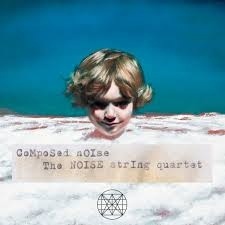
Composed Noise from The NOISE String Quartet
Have been listening too an enormously satisfying double album from The NOISE String Quartet. http://www.thenoise.com.au/TheNoiseSite/HoME.html
Composed Noise is as it is described: New Works for Improvising String Quartet. The 7 commissioned pieces combine composition with improvised elements.
This project and recording is a really wonderful development for Australian Contemporary Music and the quartet and the label Vexations 840 are to be congratulated.
The pieces are:
Rosalind Page: “Zerkalo” (Mirror) for string quartet, percussion and electronics
Andrew Batt-Rawden “28” for string quartet, electronics and video score
Alex Pozniak Force Fields for electric string quartet
Paul Cullan Merge/Emerge for string quartet
Andrew Ford String Quartet No.4 for string quartet and recorded voices
Lyle Chan Smoke Weather Stone Weather (from String Quartet) Ten bagatelles for string quartet and playing cards
Amanda Cole Ecliptica for string quartet, electronics & optional light metronome
The NOISE String quartet are: Veronique Serret and Mirabai Peart violins, James Eccles viola and Oliver Miller cello.
Buy this album.
Record intern numbers as an opportunity for workplace redesign (part 2)
Following on from the previous post where I suggested new ways of allocating teams and shift work for interns and JMOs I’d like to propose another approach to workplace redesign.
There are many tasks that interns could do to broaden their workplace experience / training and provide meaningful benefit in the hospital system.
An example is medicines reconciliation. This is the job of ensuring that patients admitted to hospital have an accurate medication history such that the medications that are supposedly prescribed for them are properly documented and when they are altered this is properly communicated back to the prescribers – family doctors and specialists. This is a continuous process through admission and discharge. Because of the lack of pharmacists in public hospitals fewer than 10% of patients, usually the highest risk patients, have this service performed. Rarely does it happen properly at discharge and many discharge letters are just wrong. Reconciliation reduces medication errors and hopefully improves patient safety.
This task is allocated to pharmacists but it doesn’t need to be: it is the responsibility of pharmacists, nurses, and doctors. And if there is a surplus of interns why not use them to perform this task.
There are many related tasks they could (or should) perform: communicating with GPs, patient education, hygiene monitors, and blood collection (which we all used to have to do). They could also be exposed to more disciplines integral to medical practice like radiology and lab based medicine.
Let’s think about the tasks that interns could do if we really have a surplus.
Record intern numbers is an opportunity for workplace redesign
This year it is anticipated 100 new medical graduates will go without intern placements in New South Wales. This problem has arisen due to a failure of the State to expand the positions in workforce whilst the Universities have increased training positions under Federal policy.
These graduates don’t need to miss out if we take a closer look at the way hospital medical practice is designed. Traditional inpatient services are built around teams that consist of an intern, plus or minus a resident, a registrar and a consultant. The normal workday would consist of the intern and registrar working a day shift. In the evening and overnight there is a progressive drop in the numbers of interns, residents and registrars providing ‘cover’ of the wards.
This traditional model of practice is inefficient. Once the day ends routine tasks done my junior medical officers are left undone. These include important tasks like discharge correspondence, recharting and ordering medications, etc. These are the tasks that smooth the patient journey ensuring patients move in and out of hospital in time effective manner. In addition the reduction of staff in the evening can reduce patient safety simply by virtue of having inadequate staff numbers available when patients deteriorate.
A different model, which some teams already use, warrants broader adoption. The ‘surplus’ junior medical officers should allow there to be dedicated early morning/day and afternoon/evening shifts that overlap. This means greater doctor coverage of the patient load and also the opportunity to process the routine tasks in a more effective manner. One of the problems of hospitals is that they are open 24/7 but don’t perform their core business functions on a 24/7 basis. Increasing core activities from 8 to 12 or 16 hours a day is a way of increasing productivity, safety and quality.
Jean-Yves Thibaudet playing Debussy
Preludes – Livre 1
Estampes
Deux Arabesques
Reverie
Masques
L’Isle joyeuse
Ludovico Einaudi – Waves: The Piano Collection: Jeroen van Veen
Jeroen van Veen plays Ludovico Einaudi
1. Le Onde (1996)
2. Eden Roc (1999)
3. I Giorni (2001)
4. Una Mattina (2004)
5. Divenire (2008)
6. Nightbook (2009)
7. In a Time Lapse (2013)
Pleasant enough piano music which some describe as minimalism. As somebody who likes minimalism this collection is all a bit ‘same-same’.
Back to pondering rosters.
Leonard Bernstein & The New York Philharmonic – Gershwin & Bernstein
Lenny conducting Rhapsody in Blue, An American in Paris & his own Symphonic Dances from West Side Story
And the Columbia Symphony
 winstonliauw