Prokofiev Symphony No.5
Alan GIlbert conducting New York Philharmonic in Prokofiev Symphony No.5 in B flat Major Op.100
Alan GIlbert conducting New York Philharmonic in Prokofiev Symphony No.5 in B flat Major Op.100
Magnus Lindberg – Piano Concerto – played by himself and The Finnish Radio Symphony Orchestra conducted by Esa-Pekka Salonen
Some of my blog posts are titled “Things they didn’t teach in medical school”.
Well I’m tempted to start another series entitled “Things my IT department won’t do for me”.
Years ago a colleague, A/Prof Matthew Links @cancersolutions tried to introduce the Moodle LMS for our oncology unit. It was blocked. No internal hosting and then no access to the external site through a firewall. Ironically – Moodle became the LMS of choice for our organisational learning unit and it is now accessible remotely.
Now we have two new problems – you can’t access any web-service (e.g. an online reference manager)that links to social networking. You can’t Facebook or tweet on hospital time……unless of course you own a mobile phone. Hmmm, I think the number of smartphones per person in our hospital is 1.2 so chances that there isn’t use of social media that is more disruptive than doing it from your hospital desktop are zilch.
The other problem is we can’t use Skype or similar services to support or clinical and educational activities. We have a registrar seconded to a satellite hospital which is 20 mins away by car. We can’t simply video-link them for a journal club. Skype or similar would be the simple solution. The alternatives – full Telstra-based video link or Webex and teleconferencing seem too hard and too expensive. And nobody want to help. Yet, if I were sitting in Tampa I could fly-by-wireless my drone into a bombing strike somewhere in Afghanistan.
It’s time the technology departments of the Australian public hospital system worked out what was happening in the outside world and caught up very quickly…..maybe in a Moore’s Law propotionality.
One the the things they definitely didn’t teach in medical school is how to run a business.
It turns out that many doctors, especially those in primary care, but also those in specialist practice will be small business owners. In some cases they will be large business owners or small business owners having a lot of interaction with larger businesses.
I’ve already commented on quite a few “things they didn’t teach in medical school” but this one really isn’t covered at all. The others, so far, are touched on, but perhaps only in passing. A modern (Australian) medical graduate really confronts the business end of medical school when they are about to graduate – suddenly the insurance companies are taking you to dinner, locum companies are mailing your, the AMA is making offers.
When you finally finish your training and set up shop in a private practice then you might join or buy into an established practice or perhaps set up your own. Either way you will need to deal with government rules about licenses and billing, employing staff, leasing space and equipment, paying tax and paying yourself – all whilst doing your job of looking after people. In fact this is the first time you actually have to learn how the medical system works.
How to run a business isn’t taught in medical school – and it should be because it is part of reality. I bet somebody out there is making big bucks teaching docs how to do it.
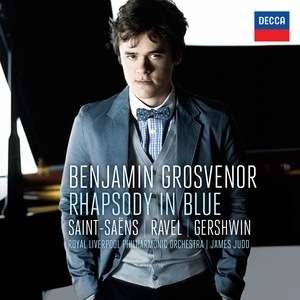
Rhapsody in Blue played by Benjamin Grosvenor and the Liverpool Royal Philharmonic Orchestra conducted by James Judd
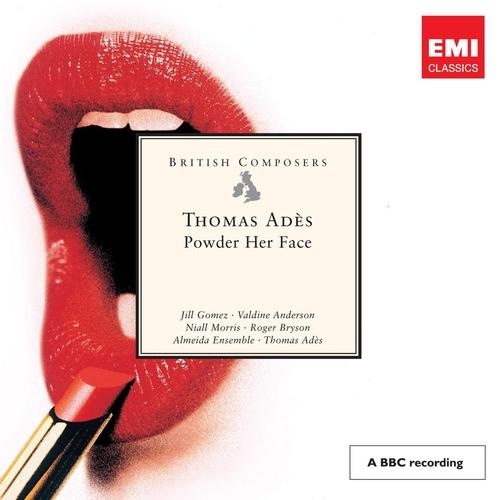
Powder Her Face, an opera by Thomas Ades
Audio CD: Conducted by the composer with the Almeida Ensemble and performed by Jill Gómez, Valdine Anderson, Niall Morris, and Roger Bryson. Recorded 1998, released 1 October 1999. (EMI: CDS5566492)
Anton Webern Six Pieces for Large Orchestra Op.6 – Karajan conducting Berlin Philharmonic
Anton Webern Symphony Op.21 played by Berlin Philharmonic under direction of Karajan

Claude Debussy – Jeux (Games) LSO conducted by Valery Gergiev
Alan Hovhaness Symphony No.1 “Exile” op.17 no.2. Boston Modern Orchestra Project with Gil Rose
 winstonliauw