Steve Reich Double Sextet
Eighth Blackbird plays Steve Reich’s Double Sextet
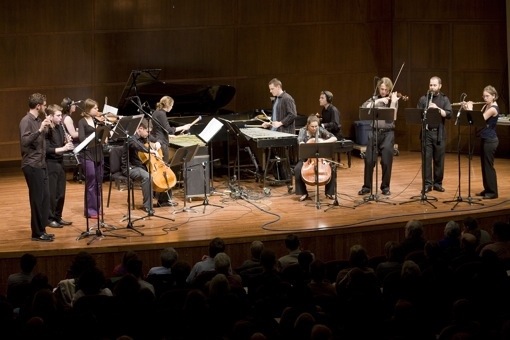
Eighth Blackbird plays Steve Reich’s Double Sextet
Michael Daugherty Time Machine, Ghost Ranch and Sunset Strip – Marin Alsop and the Bournemouth Symphony Orchestra
Marin Alsop and the Bournemouth Symphony Orchestra play Michael Daugherty’s Rout

Brooklyn Symphony Orchestra playing Low Symphony by Philip Glass – music by David Bowie and Brian Eno
OK, so this isn’t specific to medicine.
People are bad at interviewing for jobs. Doctors are probably especially bad…because expectations are too uniform but the criteria are becoming harder.
The fact is, when you interview for a job in medicine you aren’t especially “special”. You think you are special, one in a million, but in China there are a thousand of you with the same skills.
If you want the job remember:
every day is a job interview.
Finding out what the employers want if half the interview.
Being adaptable is the other half.
Well this is a half truth. Teamwork is emphasized at medical school. But is it really taught the way it works in the real world. It is more theoretical than real In medical school you do team based exercises but these are largely with peers. In hospitals and other healthcare settings there is a mix – doctors, nurses, allied health and all of differing levels of seniority. And particularly in the hospital system there is pretty constant turnover of junior staff.
We examine the competency of individuals but not of teams or competency within a team.
Teams can become dysfunctional if there is one bad player or sometimes they continue to excel despite a poor team player – nobody really knows why.
For me the key issues are clear roles, inter-team member support (the buddy system) and a common purpose.
Antal Dorati conducts the London Symphony Orchestra in Prokofiev’s Scythian Suite then the Suite from “The Love for Three Oranges”. Then the Minneapolis Symphony in Symphony No.5.
New York Philharmonic playing Feria by Magnus Lindberg
Kraft by Magnus Lindberg played by Finnish Radio Symphony Orchestra conducted by Esa-Pekka Salon
National Health Care Reform, and in fact all of Australian government, is built around the principle of subsidiarity – i.e. that delivery and implementation of services, and decisions concerning services should be made as close to the ‘coalface’ as reasonably possible. This has resulted in the creation of local health districts or LHD. The LHD receive a mixture of State and Federal funding that is predominantly administered through State ministries. The LHD governance consists of a Board and a CEO with his/her executive team.
The remit of the LHD Board is to ensure good management of the district and philosophically the Board must protect, and indeed pursue, the interests of the local community. At inception the CEO were appointed by the States rather than by the Boards and the Chairmanship of the Boards, albeit voluntary, was also essentially at the discretion of the States.
The CEO has in effect two masters – the State Ministry of Health and the Board. The CEO is bound to try and achieve the performance targets set by the State. At the current time these are largely around activity based funding. The CEO and Board and hospitals must bring the budget in on target.
The problem for hospitals and their Boards is that hospitals new improvement, renovation and redevelopment. States tend to do little to cater for recurrent infrastructure related capital expenditure so the LHD must compete politically and make the case why their institutions are more deserving than others (that might be in more politically sensitive electoral seats). The Board has a responsibility to the community it serves to try and advocate for its’ cause. The CEO should support the actions of the Board but must also accommodate the bidding of the State and not cause embarrassment for it.
We must be recognize these issues but also manage them. The Board must not let the the CEO control its’ agenda. The Board must manage the performance of the CEO and be prepared to penalise him/or for failing in either management of the LHD budget or in advocacy for the LHD.
 winstonliauw