Category: Uncategorized
Occasional Variations by Milton Babbitt
String Quartet No.6 1993 – The Sherry Quartet
Occasional Variations 1968-71 played by Milton Babbitt on the RCA Mark II Sound Synthesizer
String Quartet No.2 1952 – The Composers Quartet
Composition for Guitar 1984 played by William Anderson
Harrison Birtwistle – The Triumph of Time
BBC Symphony Orchestra conducted by Pierre Boulez
Harrison Birtwistle – The Triumph of Time, Earth Dances, Panic

Pension changes & Medicare co-payments – what do the consumers think?
Thursday this week is when the Commission of Audit is released and when the public will get a firmer idea of the fiscal recommendations that will inform the May Budget. Mr Hockey and Mr Abbott have being dropping hints like Hansel and Gretel dropping bread crumbs. Two of the biggest changes that have been suggested include changes to the pension, both to how it is calculated and the age at when retirement would commence, and the introduction of a $6 co-payment for what would otherwise be Medicare bulk-billed appointments with general practitioners.
My patients are starting to ask questions about what it all means – both for themselves but also for the country.
The message I’m coming away with is that the public isn’t so much confused as under-informed, and in particular under-informed about how everything works. When they are informed, perhaps contrary to popular expectation, they are not necessarily un-sympathetic to the government position.
Let’s take for example healthcare costs. The wife in one couple I saw this week has been receiving treatment for bowel cancer. Her story now stretches over 12 years. During this time it is likely that between surgery and chemotherapy and doctors appointments over 100K per annum has been spent by taxpayers. The individuals themselves, as pensioners but with health insurers, may have struggled to keep up with not-insignificant out-of-pocket costs but these are only a small fraction of what Government pays. This couple is exceptional in that the amount of benefit the wife received from therapy is on the right side of the median and as an individual the money was a reasonable investment. But many others haven’t benefitted as much and similar sums have been spent.
When explained like this people seem to understand the ‘sustainability’ problem. The Government needs to tell more individual stories and not just the macro-economic picture.
The budget cuts will no doubt be unpopular but unless they are done the public is very quickly going to find new things to complain about. For example, we are heading into a period of time when very expensive life-prolonging drugs will not be funded because as a country they are unaffordable. We need to make changes now to move the affordability question in our favour.
People die because changing the system is so hard
My post yesterday was about making systemic change. My point was that we do a lot of stuff locally that really should be implemented at a State or Federal level.
But let’s look at the other end: signal detection.
In recent times I’ve noticed that it is almost impossible to get a decent fluid balance record on the wards. The consequence: failure to recognise that a person emptying a full stoma bag every hour has severe diarrhoea and that 12 hourly bags ain’t going to replace the fluid losses. What’s more there were no measures to stop the diarrhoea.
We can report this incident but to be honest it isn’t enough to address the educational problems nor address the cultural issues at stake.
I’m told there is a Clinical Business Rule (CBR) around this problem but heck….who is thinking of these and how the fuck do you find them when needed. I bet none of the residents know they exist let alone know how to find them.
CBRs are good governance but poor practice….we need ways to trigger appropriate responses not just to the deteriorating patient but those at risk of deteriorating.
The Australian policy of local health care management warrants review
Australian health care, as in a lot of activities administered by Government, is managed under the auspice of subsidiarity – the idea that the decisions that affect people should be made as close to them as possible. The previous labour government entrenched this even further with the establishment of Medicare Locals (for primary care). In the acute care hospital sector in New South Wales we have Local Health Districts. These have gone by different names in the past (areas, networks, etc) and have fluctuated in size. Similar divisions are observed in the other States.
At many levels local health care delivery is entirely logical, after all, until we actually get a National Broadband Network, a decent system of telemedicine, changes to regulation of prescribing and more nurse practitioners a system that allows individuals to manage their own health care at home won’t really exist.
But there is a problem, not the least because in addition to the presence of local systems we have State and Federal government health care management organisations. Because of these tiers of government and the emphasis on local delivery of health care there is very little harmonisation across the health care system.
The problems this causes are numerous. There is an impact on quality and safety, for example, different hospitals manage DVT/PTE prophylaxis differently. Standards for medication management vary from hospital to hospital. There is also an impact on cost efficiency. It would be sensible for our relatively small population base to tender for goods and services at a State or Federal level e.g. why can’t we buy expensive machines like CT scanners or anaesthetic machines through such a process. A lot of money could be saved if we did things in the same way but at this stage we don’t even have a common identifier for individuals properly implemented.
Many quality, safety and efficiency measures could be improved we we stopped thinking, re-inventing and paying locally.
Blue Silence – Complete works for string quartet by Elena Kats-Chernin – Acacia Quartet @vexations840
Amazing work from the Vexations840 group in recording new music for string quartet. Follow the link for more information on Blue Silence
Spirit Murmur – The Shanghai String Quartet plays Alan Hovhaness
by Alan Hovhaness:
Bagatelles Op. 30, Nos. 1-4
String Quartet No.1, Op. 8, “Jupiter”
Suite from String Quartet No. 2
String Quartet No. 3, Op. 208 No. 1 “Reflections on my Childhood” (Childhood Fantasia in New England)
Quartet No. 4, Op. 208, No. 2 “The Ancient Tree” (Under the ancient maple tree)
by Zhou Long:
Song of the Ch’in
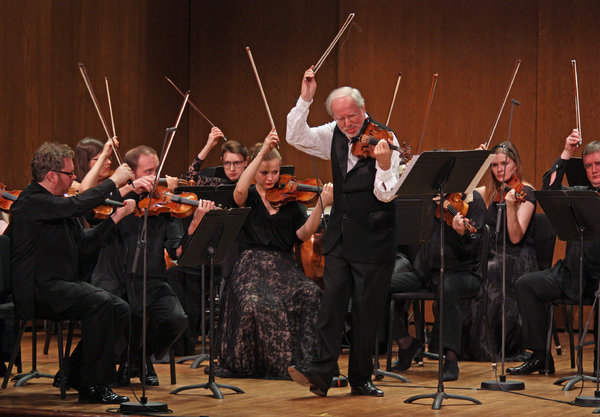
Works of Mieczyslaw Weinberg played by Gidon Kremer and Kremerata Baltica
Pieces by Miewczyslaw Weinberg:
Sonate No.3, op.126
Trio, Op.48
Sonatine, Op.46
Concertino, Op.42
Symphonie No.10, Op.98
Release the Data: a message for the Government on Health Care Costs
There is currently a rumour about a possible $6 co-payment for general practitioner consultations
The rationale is that there are too many GP consults and consequently a co-pay will reduce GP attendences. Hence, there will be a net saving for government.
This is a fine argument and in actual fact the evidence is that GP attendances are likely to decrease. The evidence is also that overall health costs don’t decrease with such actions. In fact people tend to shift where they attend for health care or alternatively by not attending for early treatment they might end up costing more.
The government should not jump in an just impose this fee. Not because it won’t decrease GP attendances but because we don’t know how Australians will compenstate. We already know that pharmaceutical co0payments reduce prescription fulfilment and we might infer that overall health is reduced as a result.
The next step should not be jumping to an unproven solution but collecting the data to support change. This includes imposing mandatory use of a universal identifier and the ability to collect and link data from primary and tertiary and acute and chronic care settings. Only then will we be able to predict and/or monitor the effects of co-pays and other interventions.
Maybe we should address illness literacy rather than health literacy
One of the major concerns for health ‘consumers’ has been around health literacy. But in reality most health individuals actually don’t worry too much about health. One of the issues we might really need to think about is illness literacy, and in particular death literacy.
Most people, aside from their doctors, don’t understand the trajectory of their illnesses, with or without treatment.
I can’t help but think if people actually understood the natural history of their illness that there would be better decisions about dealing with the end of life.
The reality is, in my profession, that incurable cancers have an inexorable, unalterable final outcome.. The ‘miracle treatments’ mostly aren’t and many individuals can’t or maybe won’t accept the inevitable. Whilst we never want to diminish hope, perhaps a reasonable understanding of what can be achieved could lead to less futile, toxic treatment, and better deaths,
 winstonliauw